Which beach to choose — it is not all the same
This is the decision that changes the trip most, and almost nobody explains it before you book. Zanzibar has enormous tides, and they do not affect the whole island equally.
On the east coast — Paje, Jambiani, Matemwe — the tide goes out hundreds of metres. At low tide you cannot swim: what is left is a beautiful flat of seaweed farms and people walking, but the sea is a very long way off. In exchange, this is where the best kitesurfing in the Indian Ocean is, and where the island looks most like itself.
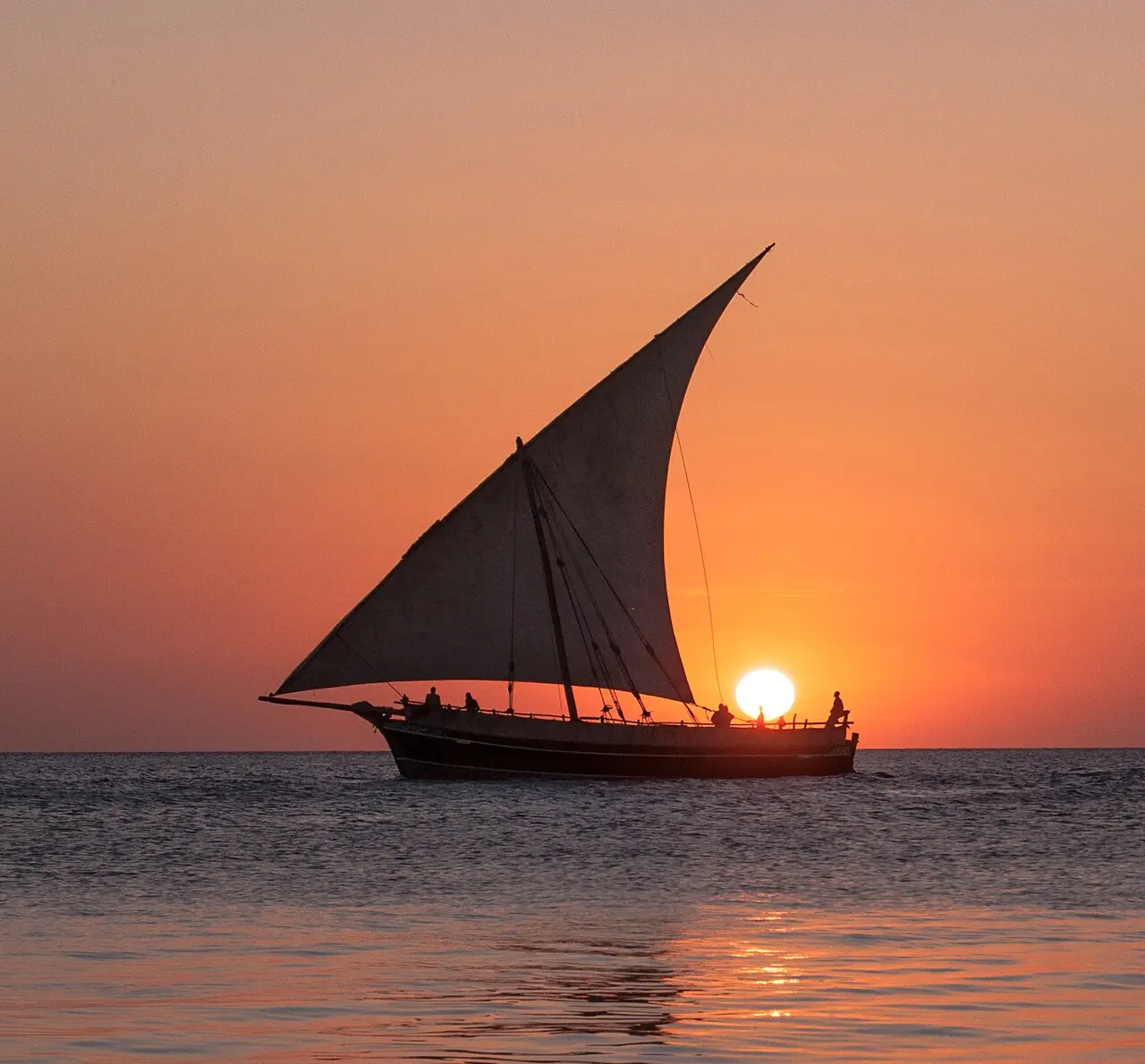
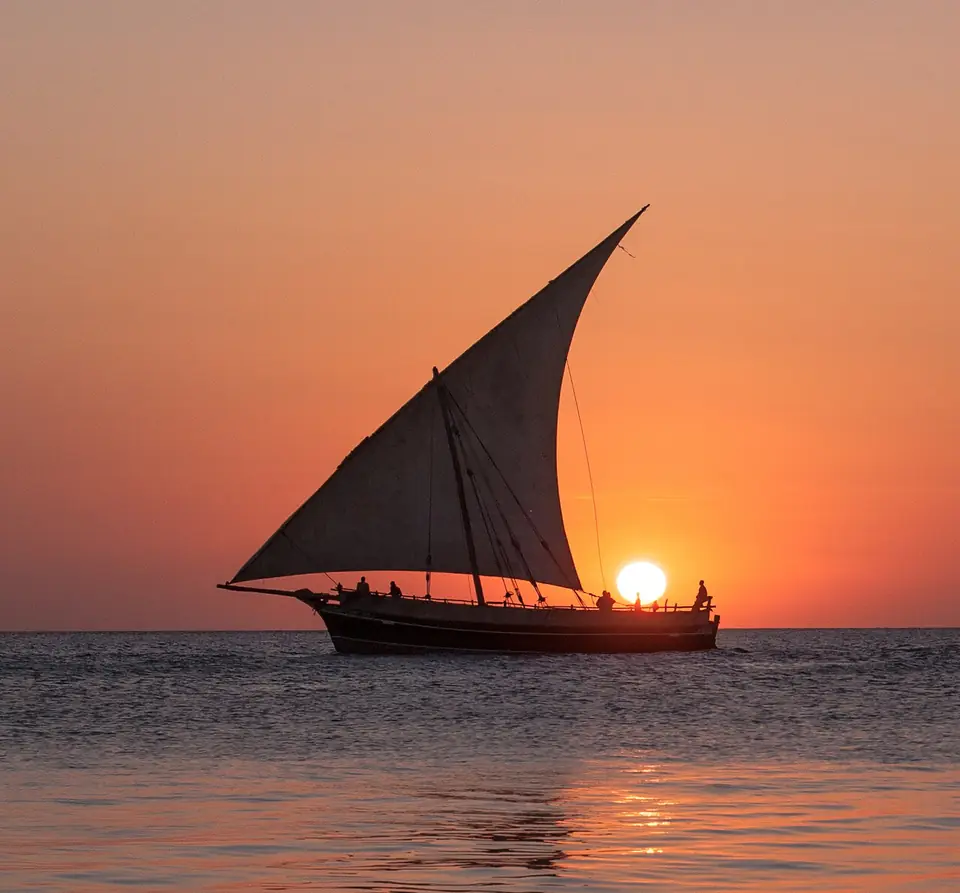
In the north — Nungwi and Kendwa — the tide barely shows and you can swim at any hour. This is sunset country, because it is the only side from which you watch the sun drop into the sea. It is also the busiest and the liveliest.
The south is the quietest, with Kizimkazi as the departure point for seeing dolphins.
If it is your first time and you want to swim without watching the clock, go north. If you want quiet and a more real island, go east.
Stone Town
Zanzibar's old town has been on the World Heritage list since 2000, and you understand why as soon as you walk in: a maze of alleys where Swahili, Omani and Indian architecture cross, because all of them came through here.
The famous things are the carved doors. Each one said who lived behind it: rectangular frames with lotus motifs are Indian in tradition, arched ones with calligraphy are Omani, and the brass spikes were copied from India, where they were meant to stop elephants.
The island's difficult history is here too. Zanzibar was the largest slave market in East Africa until 1873, and where the market stood there is now an Anglican cathedral and a memorial. It is worth seeing with someone who can explain it.
One fact everybody enjoys: Freddie Mercury was born in Stone Town in 1946.
Jozani forest and the monkey we are named after
Jozani-Chwaka Bay National Park is the last large forest left on the island, and home to the Zanzibar red colobus, a monkey that exists nowhere else on the planet. A few thousand remain.
They are used to people and you see them close up without much searching. There is also a boardwalk over the mangrove that takes about half an hour.
And yes, tumbili is Swahili for monkey. It is no accident that we like this place.
Spices, reef and dhows
Zanzibar was called the spice island for the cloves, nutmeg, cinnamon and pepper planted here in the nineteenth century. A plantation visit is one of the few tourist activities still genuinely worth doing: you pull things up, smell them and taste them.
Out at sea, Mnemba atoll is the best place to dive or snorkel, with reef and clear water. Boats leave Kizimkazi to see dolphins.
And at sunset, the dhows: the lateen-rigged boats that have been sailing these waters since before the country existed. There are sunset dhow trips, and they are what most people end up remembering about the island.